
Most sports injuries don’t require surgery – they require the right diagnosis, the right treatment, and enough time to heal properly. As a CrossFit-certified chiropractor and former team chiropractor for the North American Football League, I’ve treated athletes at every level, and the pattern I see most often is this: people either push through pain until they can’t, or they jump straight to surgery before exploring what conservative care can do. There’s usually a better path in between.
The Sports Injuries That Respond Best to Chiropractic
Not every injury is a chiropractic case, and I’ll be honest when something needs a surgeon or a specialist. But the majority of sports injuries involve soft tissue, joint mechanics, and nerve function – which is exactly where chiropractic care has the most to offer.
Spinal and Joint Injuries
Any sport that involves contact, rotation, repetitive loading, or high-impact movement puts stress on the spine and its supporting joints. Football, wrestling, CrossFit, running, cycling, baseball, golf – each sport has its own injury profile, but they all share spinal involvement in one way or another.
When vertebrae shift out of proper alignment from a hit, a fall, or chronic repetitive stress, they create nerve pressure and restrict movement. That shows up as pain, tightness, reduced range of motion, or strength deficits that don’t resolve on their own. Chiropractic adjustments restore proper joint alignment and take pressure off the nervous system so the body can actually heal.
Disc Injuries
Herniated and bulging discs are common in athletes, especially those who lift heavy, play contact sports, or do a lot of spinal flexion and extension under load. The good news is that most disc injuries respond well to non-surgical treatment when caught early. Spinal decompression therapy gently reduces pressure inside the disc and encourages it to retract, often providing significant relief without injections or surgery.
I’ve worked with athletes who were told they needed surgery for a disc herniation, only to fully recover through decompression, chiropractic adjustment, and appropriate rest. That doesn’t mean surgery is never the answer – sometimes it is. But it should rarely be the first answer.
Shoulder and Rotator Cuff Issues
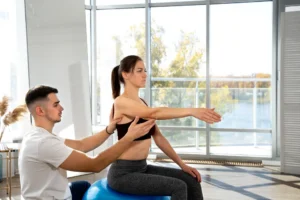
Shoulder injuries are extremely common in throwing athletes, swimmers, CrossFitters, and anyone doing overhead work. Many shoulder problems that feel like a rotator cuff issue actually have a cervical spine component – nerve irritation from the neck referring into the shoulder and affecting muscle function. Treating the shoulder alone without addressing the cervical spine often produces incomplete results.
Chiropractic assessment looks at the whole picture: cervical alignment, shoulder joint mechanics, thoracic mobility, and how the different pieces interact. That’s a more complete picture than focusing on the shoulder in isolation.
Hip and Pelvis Injuries
Hip flexor strains, SI joint dysfunction, and piriformis syndrome are all common in runners, cyclists, and field sport athletes. These often have both a muscular and structural component. SI joint misalignment, for example, won’t resolve with stretching if the joint itself needs to be realigned. Chiropractic adjustment combined with soft tissue work addresses both the structural and muscular sides of these injuries.
Ankle and Knee Injuries
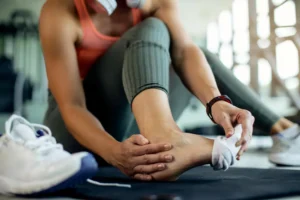
After an ankle sprain, most athletes focus on the ankle itself – strengthening, taping, and getting back on the field. What often gets missed is the effect the ankle injury has on the mechanics up the chain. A protective compensation in the ankle changes how the knee, hip, and lower back absorb force. Addressing the whole kinetic chain after a lower extremity injury reduces the risk of secondary problems developing weeks or months later.
Cold Laser Therapy: A Recovery Tool Serious Athletes Should Know About
One of the tools that separates our approach from a standard chiropractic office is the FX 635 cold laser. This is the same class of technology used by professional sports teams for accelerated recovery. It uses low-level light energy to stimulate tissue repair at the cellular level, reduce inflammation, and decrease pain – without any drugs and without any heat or discomfort.
I use cold laser therapy regularly with athletes for acute soft tissue injuries, tendinopathies, joint inflammation, and post-competition recovery. The results are consistently impressive, particularly for injuries that have been lingering. Tissue that’s been inflamed for weeks often responds within a handful of laser sessions in ways that rest and ice alone never achieved.
For athletes trying to shorten recovery timelines without masking symptoms with medication, this is a significant tool.
Sports Performance Is Part of the Equation Too
Chiropractic care for athletes isn’t just about treating injuries. Proper spinal alignment directly affects nerve conduction, which affects muscle activation, coordination, and power output. Many athletes notice improvements in performance metrics – strength, reaction time, flexibility – after chiropractic care, even when they came in without a specific injury complaint.
Our sports performance and recovery approach looks at how your body is moving, where restrictions are limiting output, and how to get you performing at your ceiling rather than around your limitations. That’s a different conversation than just getting you out of pain.
When Should an Athlete See a Chiropractor?
The honest answer is: before you’re in significant pain. Reactive care – waiting until something breaks down – is always more time-consuming and expensive than proactive care. The professional athletes I worked with at the team level didn’t see a chiropractor only when they were hurt. They had regular maintenance work done to keep their spine and joints moving correctly so injuries were less likely to happen in the first place.
That said, here are the signals that warrant an immediate evaluation:
- Pain that persists more than a few days after an injury
- Numbness, tingling, or weakness radiating into an arm or leg
- Restricted range of motion that’s affecting your training
- Recurring injuries to the same area
- Pain that’s gradually worsening rather than improving
- Performance plateaus you can’t explain
What Athletes in Ankeny Can Expect at Their First Visit
Your first visit includes a thorough consultation, orthopedic and neurological examination, and where appropriate, on-site X-rays so we’re not guessing about what’s happening structurally. I’m not running an assembly-line practice. I spend actual time understanding your sport, your training load, your injury history, and what recovery looks like for you specifically.
From there, we build a plan that fits your timeline and your goals – whether that’s getting back to competition as quickly as possible, working around an injury during a training cycle, or addressing something that’s been limiting your performance for years. Sports injuries have a clear path to recovery when you address them correctly from the start.
Athletes and active people in Ankeny and the Des Moines area: if you’re dealing with a sports injury or just want to perform at a higher level with less pain, call us at (515) 895-4927 or book your visit online. New patients get started with our $50 new patient special, which includes a full consultation, exam, and report of findings.