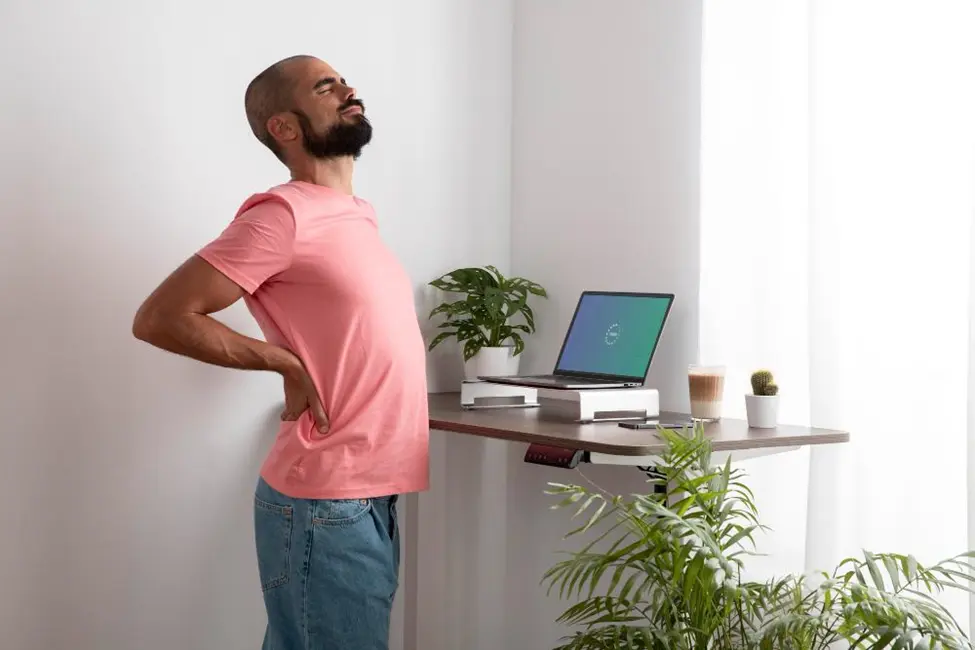
Yes, bad posture can cause chest and back pain. When you slouch or hunch forward, your chest muscles shorten and tighten while your upper back muscles become overstretched and weak. This imbalance compresses your rib cage, strains the joints where ribs connect to your spine and breastbone, and irritates nerves—resulting in chest tightness, upper back aching, and rib pain that worsens throughout the day. The good news: posture-related pain typically responds well to targeted exercises, ergonomic changes, and chiropractic care.
What Is Good Posture—and Why Does It Matter?
Posture refers to how you hold your body while standing, sitting, or lying down. Good posture means your spine maintains its natural curves with minimal strain on muscles, ligaments, and joints.
In our world of desk jobs, smartphones, and prolonged sitting, poor posture has become increasingly common. When your body consistently assumes misaligned positions, it creates imbalances that can lead to chronic pain throughout your musculoskeletal system.
Here’s what many people don’t realize: poor posture doesn’t just affect your back. It creates a cascade of problems that manifest as pain in unexpected places—your chest, ribs, shoulders, and even your abdomen. Many Ankeny residents develop workplace posture injuries without recognizing the long-term impact on their health.
How Bad Posture Causes Chest Pain
When you maintain poor posture for extended periods, it affects the muscles, joints, and structures in your chest area in several ways.
The Muscle Imbalance Problem
Poor posture—particularly forward-leaning or slouched positions—creates mechanical stress on your chest muscles and rib cage. When you round your shoulders forward and allow your head to drift ahead of your spine:
- Your pectoralis muscles (main chest muscles) become chronically shortened and tight
- Your upper back muscles become overstretched and weak
- This imbalance creates trigger points, muscle fatigue, and pain radiating across your chest
Rib Cage Compression
Slouching compresses your rib cage, limiting space for your ribs to expand during breathing. This puts abnormal pressure on your costochondral joints (where ribs connect to your breastbone) and can irritate the intercostal muscles between your ribs. The result: chest tightness, restricted breathing, and pain that worsens with deep breaths.
Common Postural Conditions That Cause Chest Pain
Upper Crossed Syndrome — Tight chest and neck muscles combined with weak upper back muscles create the classic “hunched” appearance, placing tremendous strain on your chest area.
Kyphosis — Excessive forward rounding of the upper back alters your rib cage position, causing chest pain, breathing difficulties, and reduced lung capacity.
Forward Head Posture — When your head sits several inches forward of its optimal position (often called “text neck”), it creates compensatory changes throughout your spine and chest that frequently cause chest discomfort along with neck and shoulder pain.
These conditions can also contribute to spinal issues like herniated or bulging discs, which may cause additional radiating pain.
What Does Posture-Related Chest Pain Feel Like?
Chest pain from poor posture typically presents as:
- A dull ache or tightness across the front of your chest
- Pain concentrated on one side or near the breastbone
- A band of pressure across your chest
- Sharp, stabbing sensations that worsen with movement, deep breathing, or prolonged sitting
Unlike cardiac chest pain, postural chest pain usually improves with position changes and worsens with sustained poor posture.
How Poor Posture Causes Back Pain

Poor posture is one of the leading causes of both acute and chronic back pain. When your spine isn’t properly aligned, it creates excessive stress on muscles, ligaments, discs, and joints.
Lower Back Pain
Your spine has natural curves that distribute weight and absorb shock. Slouching flattens the curve in your lower back and increases the curve in your upper back, disrupting normal function.
Poor sitting posture increases pressure on your lumbar discs by up to 90% compared to standing. This excessive pressure can lead to disc degeneration, herniation, and chronic pain. The muscles supporting your lower spine become fatigued from compensating for poor alignment, resulting in strain, spasms, and persistent discomfort.
Many people experience lower back pain that stems directly from postural dysfunction accumulated over years.
Upper Back Pain
When you round your shoulders forward, the muscles between your shoulder blades become overstretched and weak while chest muscles tighten. This imbalance creates chronic tension, trigger points, and upper back pain that typically worsens throughout the day.
Rib and Sternum Pain
The connection between poor posture and rib pain is often overlooked. When your spine is misaligned, it affects the costovertebral joints where ribs attach to vertebrae. These joints can become inflamed or restricted, causing pain along your ribs that may wrap around to your chest.
Costochondritis—inflammation of cartilage connecting ribs to your breastbone—is frequently triggered or worsened by poor posture. Forward-rolled shoulders and a rounded upper back place excessive stress on these cartilage joints, leading to sharp, stabbing pain near your sternum.
Spinal decompression therapy can help address underlying spinal issues contributing to rib and sternum pain by relieving pressure on compressed structures.
Can Bad Posture Cause Abdominal Pain?
Yes, though it’s less commonly discussed. Chronic slouching compresses your abdominal cavity, affecting digestive organs and potentially slowing digestion—contributing to bloating, constipation, and discomfort. Poor posture also weakens core muscles over time, leading to abdominal strain when you try to correct your alignment or engage in physical activity.
Shoulder and Sternum Pain from Poor Posture
When you maintain a forward-rounded posture, your shoulders roll inward, placing your shoulder blades in a dysfunctional position. Your rotator cuff muscles must work harder to compensate, often leading to overuse injuries, tendinitis, and chronic pain.
Nerve involvement is another factor. Poor posture can compress the brachial plexus—a network of nerves controlling sensation and movement in your shoulders and arms. Compression causes pain, tingling, numbness, or weakness that can extend down your arms.
Sternum pain results from altered rib cage mechanics and chronic tension in muscles anchoring to your breastbone, including your pectoralis muscles and diaphragm.
How to Relieve Posture-Related Pain
Pain caused by poor posture is often reversible with consistent effort and the right interventions.
Stretches for Posture-Related Pain
- Doorway chest stretch — Stand in a doorway with arms at 90 degrees against the frame, then gently step forward to stretch tight chest muscles
- Thoracic spine extensions — Sit in a chair, place hands behind your head, and gently arch your upper back over the chair’s backrest
- Cat-cow stretches — On hands and knees, alternate between arching and rounding your spine
- Child’s pose — Kneel and sit back on your heels while reaching arms forward
- Neck stretches — Gently tilt your head to each side and rotate through full range of motion
Strengthening Exercises
- Scapular squeezes — Squeeze shoulder blades together, hold 5 seconds
- Rows — Using resistance bands, pull elbows back while squeezing shoulder blades
- Planks — Hold a push-up position on forearms to strengthen core muscles
- Wall angels — Stand against a wall and slowly raise/lower arms while maintaining wall contact
- Chin tucks — Pull chin straight back to strengthen deep neck muscles
Consistency matters—daily practice yields the best results.
Chiropractic Care for Posture Problems
Professional intervention can dramatically accelerate recovery. Chiropractic adjustments restore proper spinal alignment, reducing nerve irritation and muscle tension. Soft tissue therapy releases tight muscles contributing to postural imbalances.
Cold laser therapy can reduce inflammation and accelerate tissue healing without invasive procedures. For disc-related issues accompanying poor posture, spinal decompression therapy relieves pressure on compressed structures.
A comprehensive treatment approach considers how your body’s systems work together, providing lasting relief rather than temporary symptom management.
Ergonomic Adjustments
- Position your computer monitor at eye level
- Ensure feet rest flat on the floor
- Use a chair with proper lumbar support
- Take breaks every 30-60 minutes to stand and stretch
- Bring your smartphone to eye level rather than bending your neck down
When to Seek Medical Attention
Call 911 immediately if chest pain is accompanied by shortness of breath, dizziness, nausea, or pain radiating to your arm or jaw—these could indicate a cardiac emergency.
See a doctor promptly for:
- Severe pain that doesn’t improve with rest or position changes
- Pain accompanied by fever or unexplained weight loss
- Numbness, weakness, or loss of bowel/bladder control
- Pain following trauma or injury
- Persistent pain lasting more than a few weeks despite self-care
For posture-related pain without emergency symptoms, consulting a chiropractor is an excellent first step. Dr. Dale Kimberlin specializes in diagnosing and treating musculoskeletal conditions stemming from poor posture and auto accident injuries that may have altered your alignment.
Frequently Asked Questions
How long does it take to correct posture and relieve pain?
Most people notice improvement within 2-4 weeks of consistent stretching, strengthening exercises, and ergonomic changes. However, postural habits developed over years may take several months to fully correct. Professional chiropractic care can accelerate this timeline significantly.
Can posture cause chest pain that feels like a heart attack?
Yes, severe posture-related chest pain can mimic cardiac symptoms—tightness, pressure, and difficulty breathing. The key differences: postural chest pain typically changes with position, worsens with certain movements, and improves when you stand or stretch. However, if you’re unsure, always err on the side of caution and seek emergency care.
Why does my chest hurt more at the end of the workday?
Sustained poor posture accumulates stress on your chest muscles, rib joints, and thoracic spine throughout the day. By evening, your chest muscles are maximally shortened, your upper back muscles are fatigued, and inflammation has built up—creating peak pain levels.
Can a chiropractor help with posture-related chest pain?
Yes. Chiropractors address the spinal misalignments and muscle imbalances causing postural chest pain. Treatment typically includes spinal adjustments, soft tissue work, corrective exercises, and ergonomic guidance to prevent recurrence.
Find Relief in Ankeny
Don’t wait until posture-related pain becomes a chronic problem. With 25+ years of experience treating musculoskeletal conditions, Dr. Dale Kimberlin can identify your specific postural dysfunctions and create a targeted treatment plan.
Ready to stand taller and feel better? Call (515) 895-4927 or schedule your $50 new patient evaluation today.