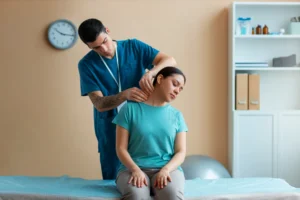

Chiropractic care is one of the most effective tools available for helping older adults manage pain, maintain mobility, and stay independent longer – and it’s significantly safer and more sustainable than long-term reliance on pain medication. At Kimberlin Chiropractic Health Systems in Ankeny, Dr. Dale Kimberlin regularly treats patients in their 60s, 70s, and beyond, using gentle techniques specifically adapted for aging bodies.
Why the Aging Spine Needs a Different Kind of Attention
The spine changes with age in predictable ways. Discs lose some of their water content and become thinner, which reduces the cushioning between vertebrae and increases the likelihood of nerve irritation. Facet joints develop arthritis and lose some of their range of motion. Muscles that support the spine weaken if they’re not regularly used. Bone density decreases. These changes are normal – but they don’t have to mean a life defined by pain and limitation.
The key distinction I make with older patients is this: age-related changes in the spine are inevitable. Suffering because of them is not. The right care keeps the joints moving as well as possible, manages inflammation, maintains muscle function, and catches problems before they become serious – all without the side effects that come with long-term medication use.
I’ve treated patients well into their 80s who came in barely able to walk and left the practice with dramatically improved mobility and quality of life. Age is not a barrier to meaningful improvement. It just requires an honest, thoughtful approach to what techniques are appropriate and what realistic progress looks like.
Common Conditions in Older Adults That Chiropractic Addresses Well
Spinal Stenosis
Spinal stenosis – a narrowing of the spinal canal that puts pressure on the nerves running through it – is extremely common in older adults and produces the characteristic pattern of pain and leg weakness that worsens with walking and improves with sitting or bending forward. While chiropractic can’t reverse the structural narrowing itself, gentle adjustments, decompression therapy, and targeted soft tissue work can significantly reduce the nerve irritation and improve functional capacity. Many stenosis patients find they can walk considerably further without symptoms after a course of chiropractic care.
Degenerative Disc Disease
Degenerative disc disease sounds alarming but is essentially the expected wear and tear of spinal discs over decades of use. The discs thin and may develop small tears, producing chronic low-grade back pain, stiffness, and sometimes nerve symptoms. Spinal decompression therapy promotes hydration and healing of compromised discs, while chiropractic adjustments keep the surrounding joints moving properly and prevent the compensatory patterns that often create secondary pain sources.
Osteoarthritis
Arthritis in the spine and peripheral joints is nearly universal in older adults to some degree. It causes stiffness, aching, reduced range of motion, and can contribute to nerve compression when bone spurs develop. Regular chiropractic care keeps arthritic joints as mobile as possible, slowing the functional decline that comes from progressive stiffness and disuse. It won’t reverse the arthritic changes – nothing will – but it makes a meaningful difference in day-to-day pain and movement.
Balance Problems and Fall Risk
Falls are one of the leading causes of serious injury in older adults, and the consequences of a fall at 70 or 80 are far more serious than at 40. Cervical spine dysfunction affects proprioception – the body’s sense of where it is in space – which directly impacts balance. Upper cervical chiropractic adjustments can improve proprioceptive signaling and reduce the dizziness and balance issues that increase fall risk. Several of my older patients have specifically noted improved confidence on their feet after starting care, which matters enormously for independence.
Hip and Pelvic Pain
Hip pain in older adults often has both a joint component and a spine component. The lumbar spine and sacroiliac joints directly affect how load travels through the hips, and misalignment in that region can make hip pain worse even when the hip joint itself is the primary problem. Chiropractic care addresses the pelvic and lumbar contributors, which often provides meaningful relief even for patients who have been told their only option is hip replacement.
How We Adapt Treatment for Older Patients
This is where experience matters. Treating a 72-year-old with osteoporosis and degenerative disc disease is very different from treating a 35-year-old athlete. The techniques, the force used, the pace of care, and the goals of treatment all need to be calibrated appropriately.
At our Ankeny practice, we never apply high-velocity rotational adjustments to patients where bone density concerns or significant degeneration make that inappropriate. Instead, we rely heavily on low-force instrument-assisted adjustments, drop-table techniques, flexion-distraction, and decompression – all of which are highly effective and well-tolerated by older patients. The goal is always to accomplish the clinical objective with the least amount of force necessary.
We also move at the patient’s pace. Some older adults improve quickly and can tolerate a more active treatment approach. Others need a slower, more gradual progression. There’s no standard template – every patient gets an approach built around their specific condition, health history, and comfort level.
The Case Against Long-Term Pain Medication in Older Adults
It’s worth saying directly: long-term use of NSAIDs like ibuprofen and naproxen carries significant risks for older adults, including gastrointestinal bleeding, kidney damage, and cardiovascular complications. Opioid pain medications carry risks of dependence, cognitive effects, and increased fall risk. These aren’t small concerns – they’re well-documented and frequently underappreciated by patients who have been told to “just take something for the pain.”
Chiropractic care as a primary pain management strategy – rather than a supplement to heavy medication use – eliminates those risks entirely. For older adults who want to manage pain without compounding their health risks, it’s one of the most sensible options available. Paired with nutritional support to reduce systemic inflammation, the results are often better than anything medication alone has produced.
Staying Active Is the Goal
One thing I’ve seen consistently over 25+ years of practice is that the older adults who stay most mobile, most independent, and most pain-free are the ones who stay active. Not necessarily running marathons – just moving regularly, maintaining muscle, and keeping their joints working. Chiropractic care supports that goal directly by removing the pain barriers that stop people from being active in the first place.
When a 68-year-old patient can’t walk their dog around the block without hip pain, that’s not just a physical problem – it affects their mental health, their social life, and their independence. Getting them back to that walk is meaningful. Custom orthotics combined with chiropractic care have made that specific difference for more patients than I can count – correcting the foot mechanics that were loading the hip wrong, while adjustments addressed the hip and lumbar alignment simultaneously.
If you or a parent or grandparent in Ankeny or the Des Moines area is dealing with chronic pain, mobility limitations, or balance issues, come in and let’s talk about what’s possible. Call us at (515) 895-4927 or request an appointment online. New patients get started with our $50 new patient special, which includes a full consultation, exam, foot scan, and report of findings.